Role
Product Designer – Product Vision, Website, MVP Product
Team
Founder, Developer, Project Manager
Timeline
Desktop Platform (React), Website (Elementor)
Timeline
2022
Early Vision & Direction Setting
Moving at startup speed meant balancing rapid execution with usability. Without the luxury of an extended research timeline, I relied on secondary market research, competitive analysis, and foundational UX principles to drive early decisions.
To keep development velocity high, we initially built on top of a lightweight, off-the-shelf design system and leveraged libraries like FontAwesome for icons. However, as the platform’s SaaS capabilities expanded, we strategically pivoted to a custom component library tailored to our evolving tech stack and complex data displays.
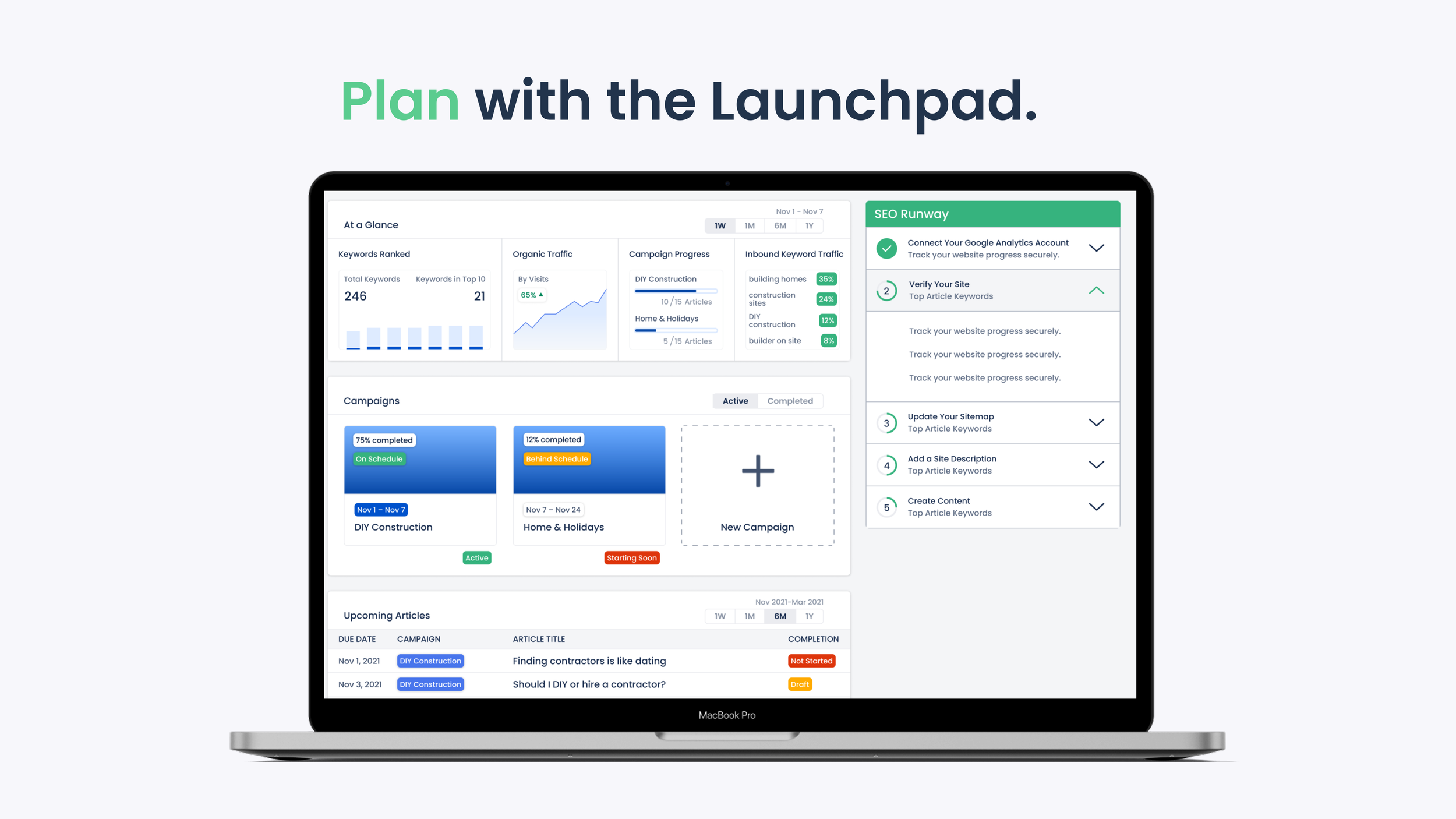
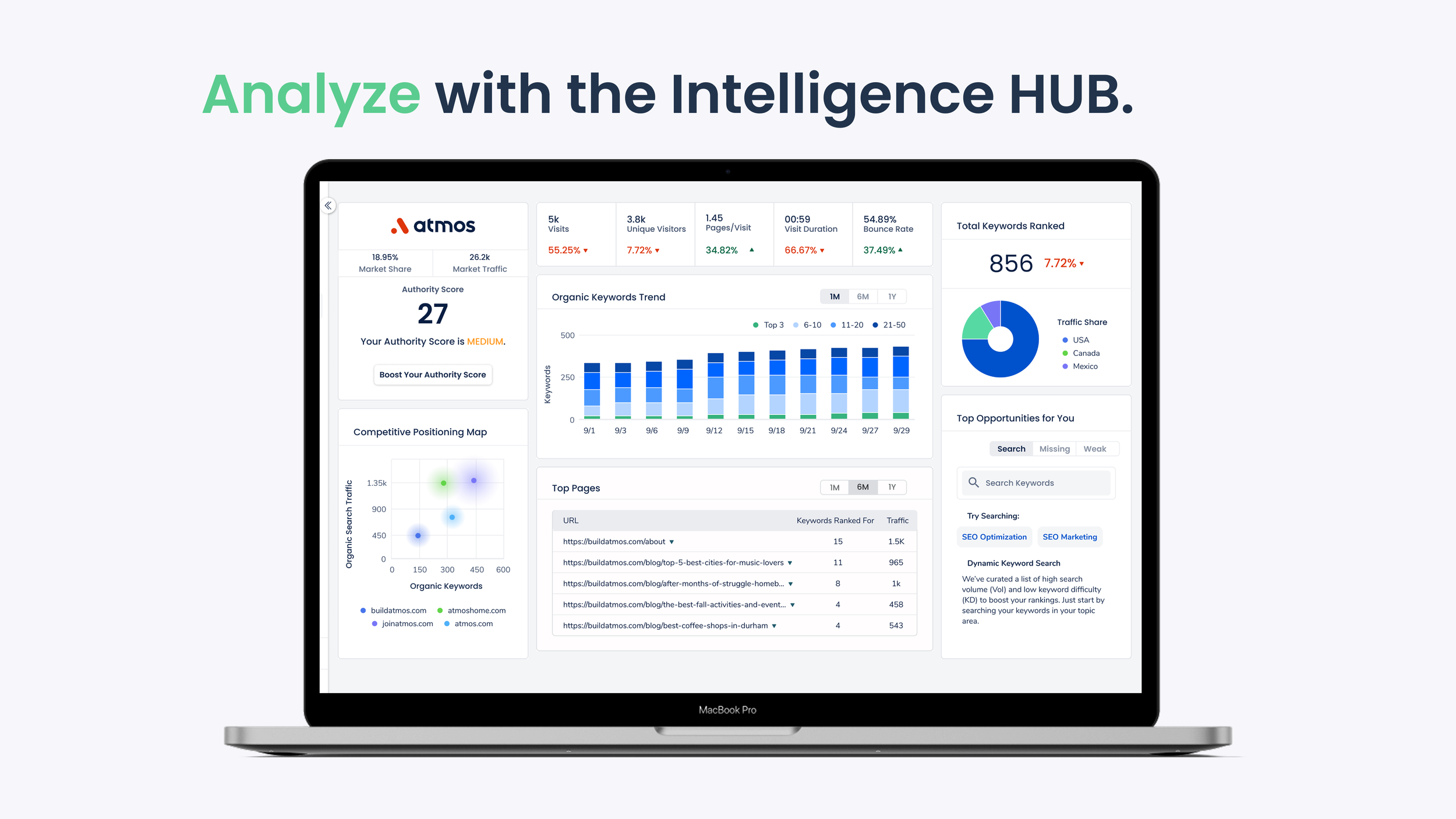
Website Launch
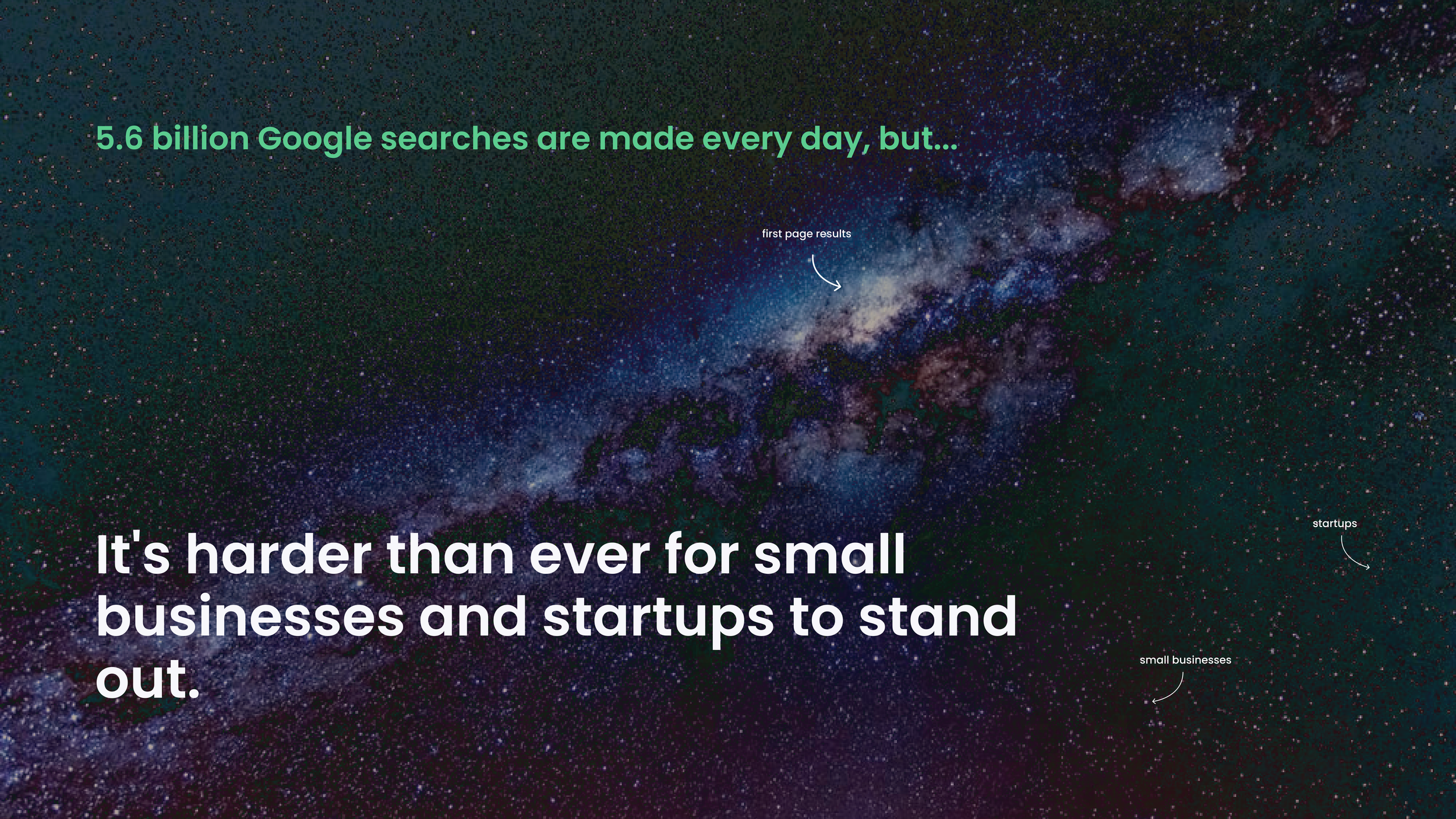
Our immediate goal was to position SageSEO as an approachable, modern alternative to overly complex marketing suites.

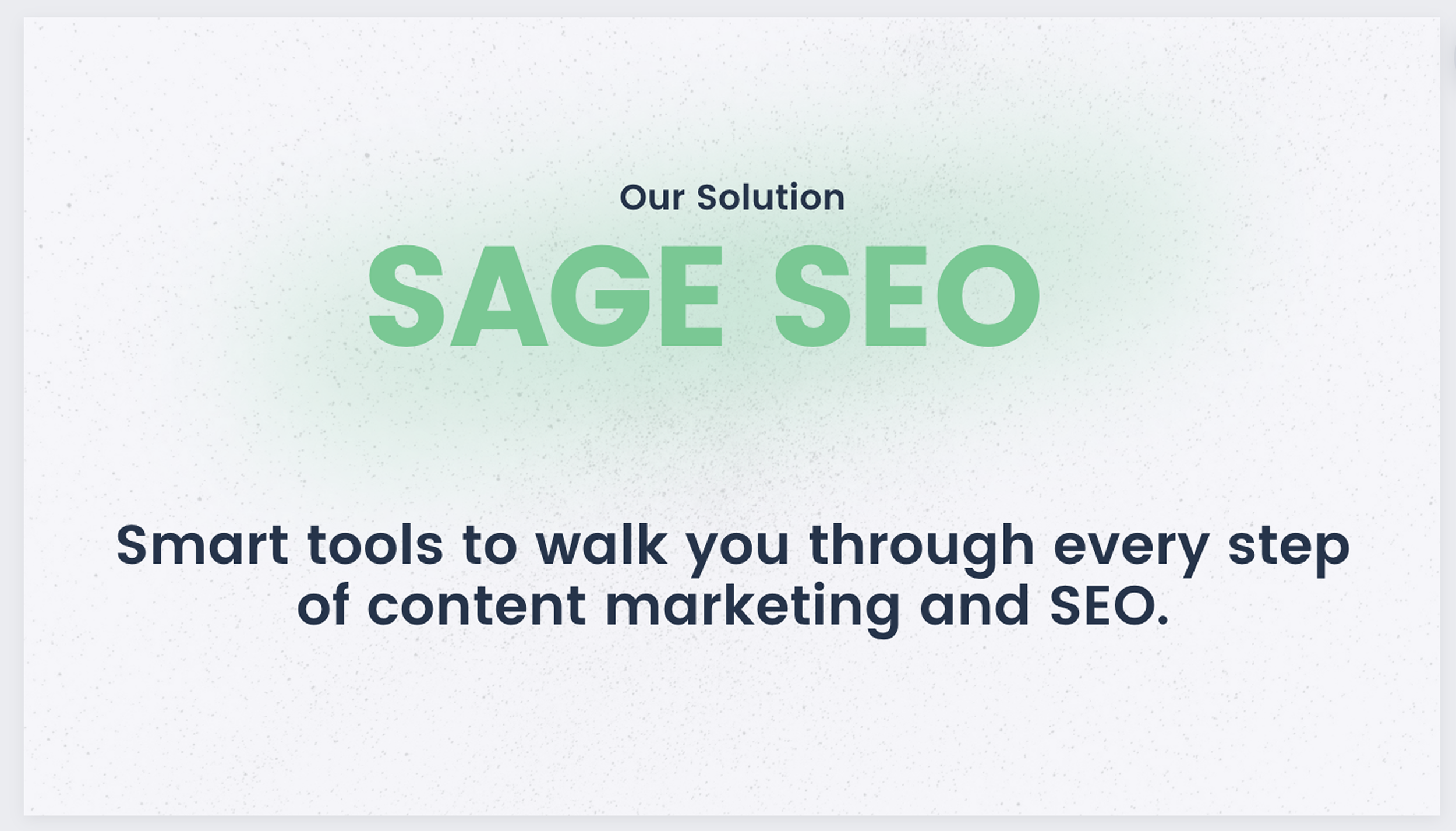
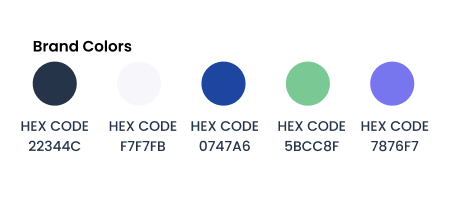
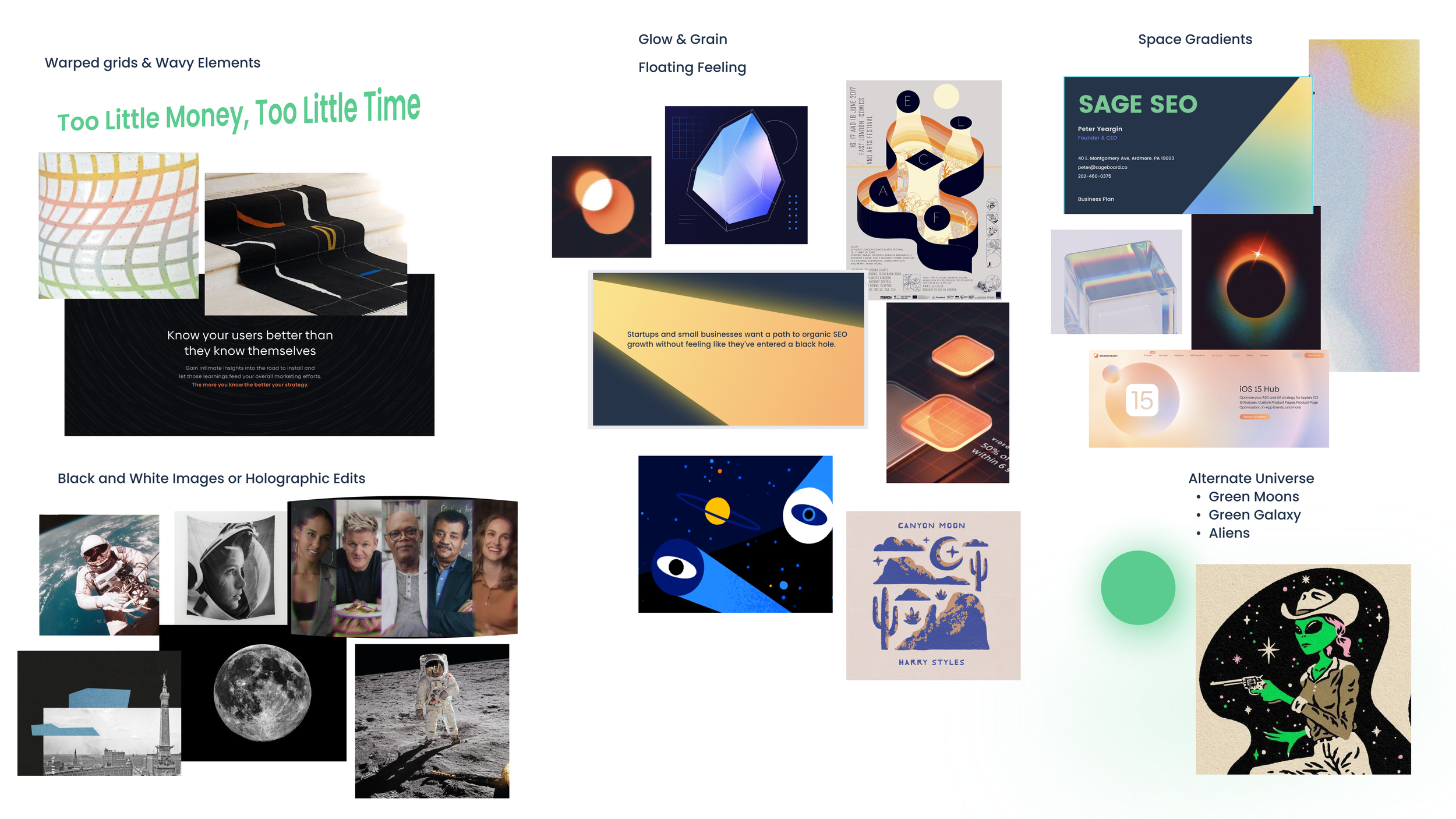
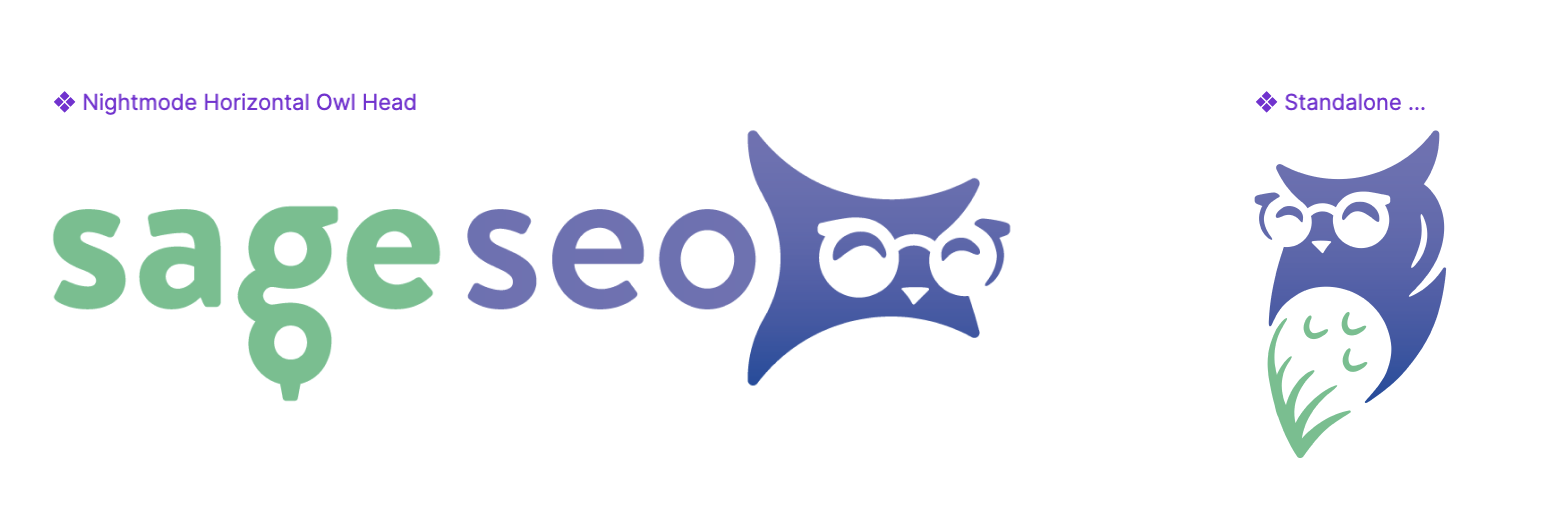
To stand out against sleek, sterile B2B competitors, we introduced tactile textures and an approachable color palette that felt familiar and welcoming to small business owners. I worked with a graphic designer to create the logo and "Owly" mascot, bringing a friendly personality to AI-assisted workflows.
Core Product Experience
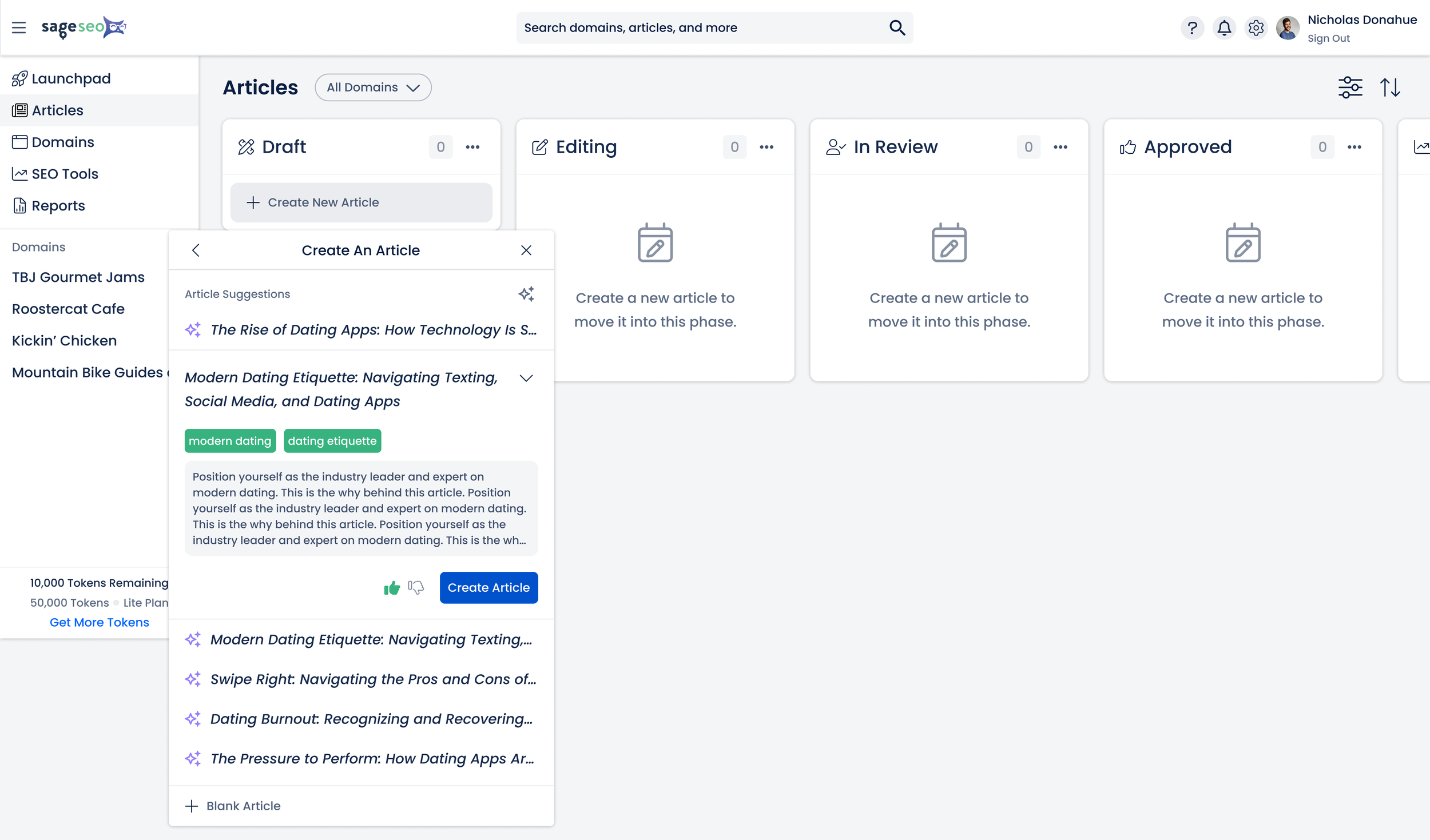
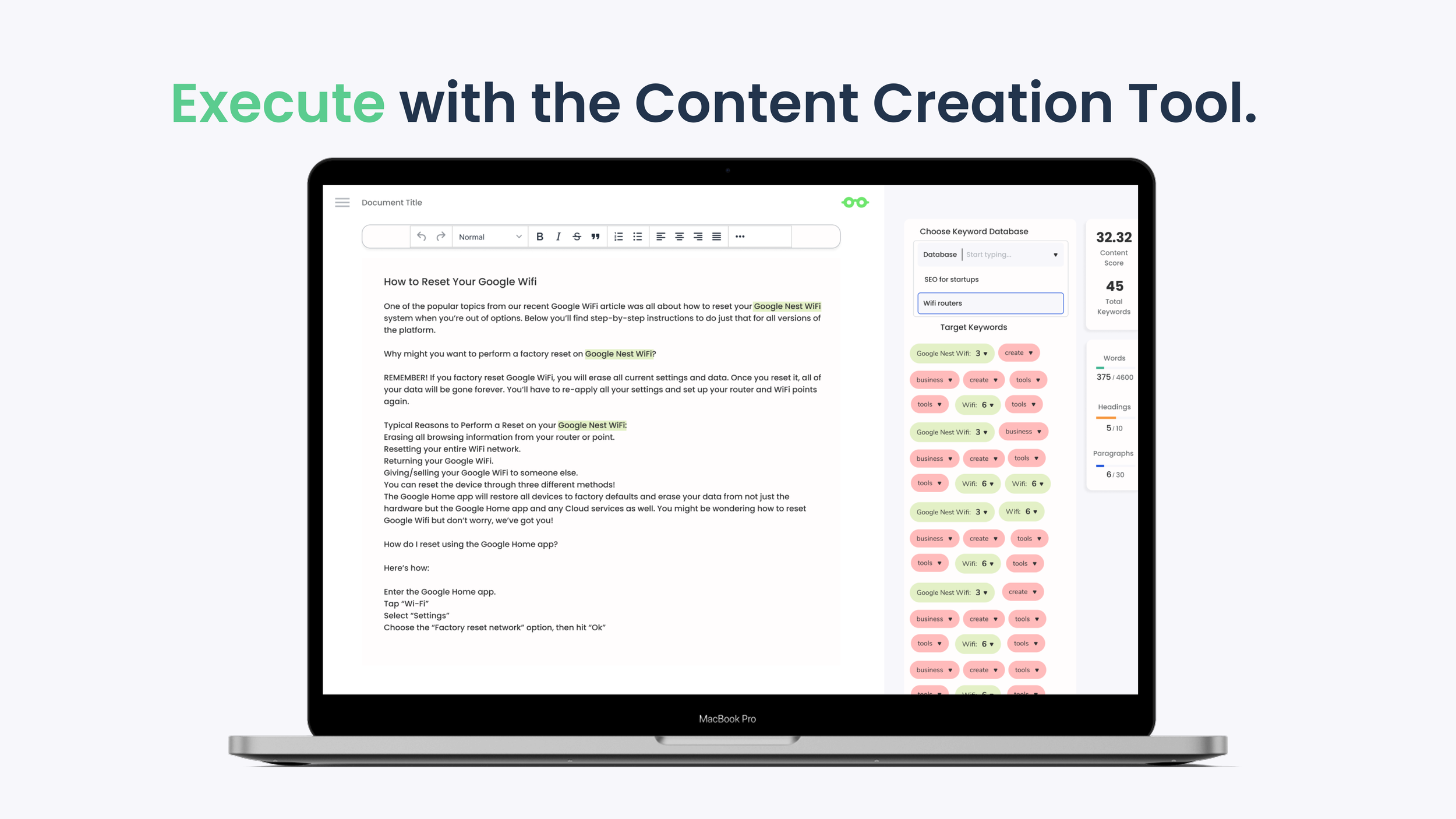
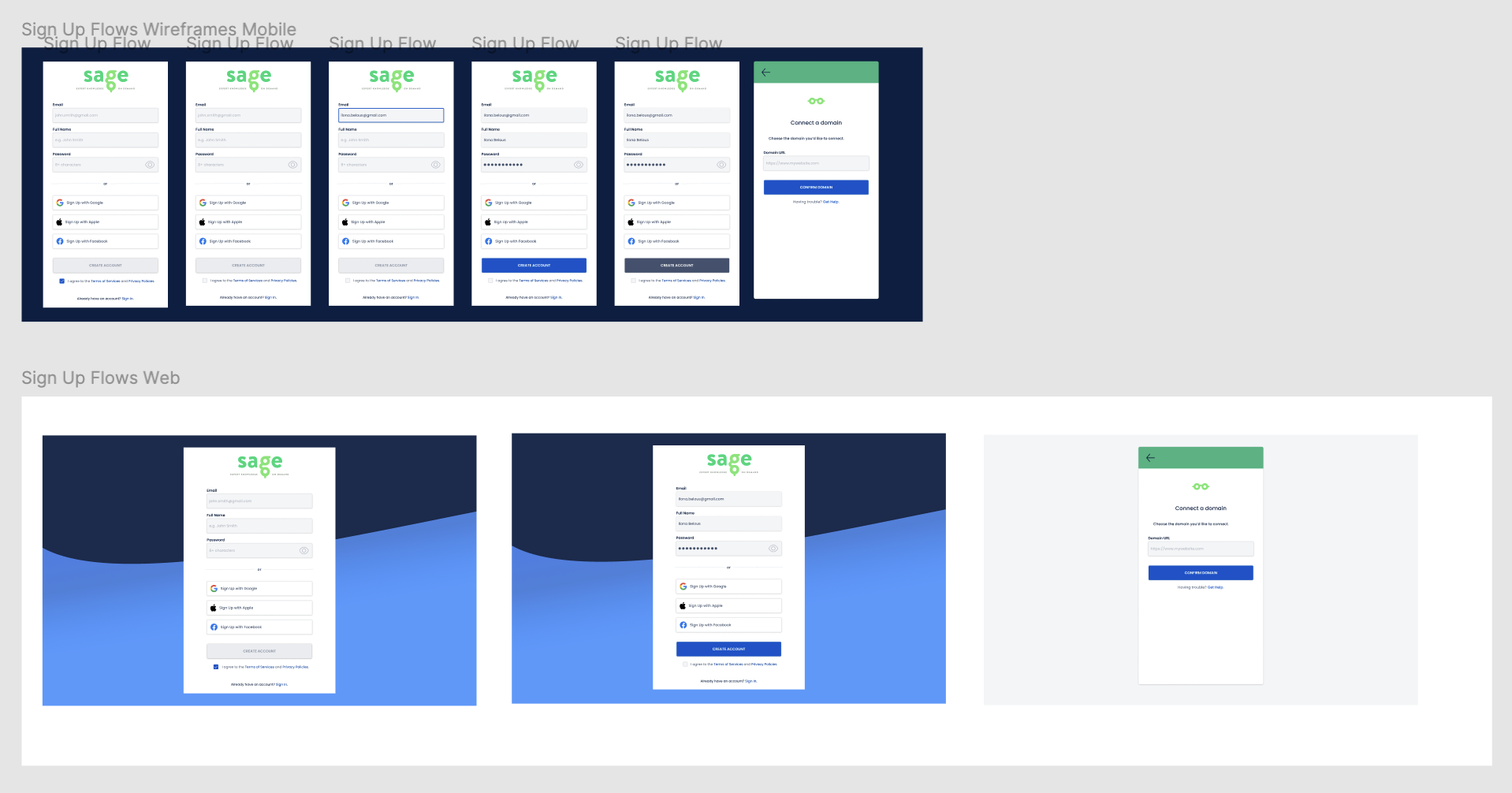
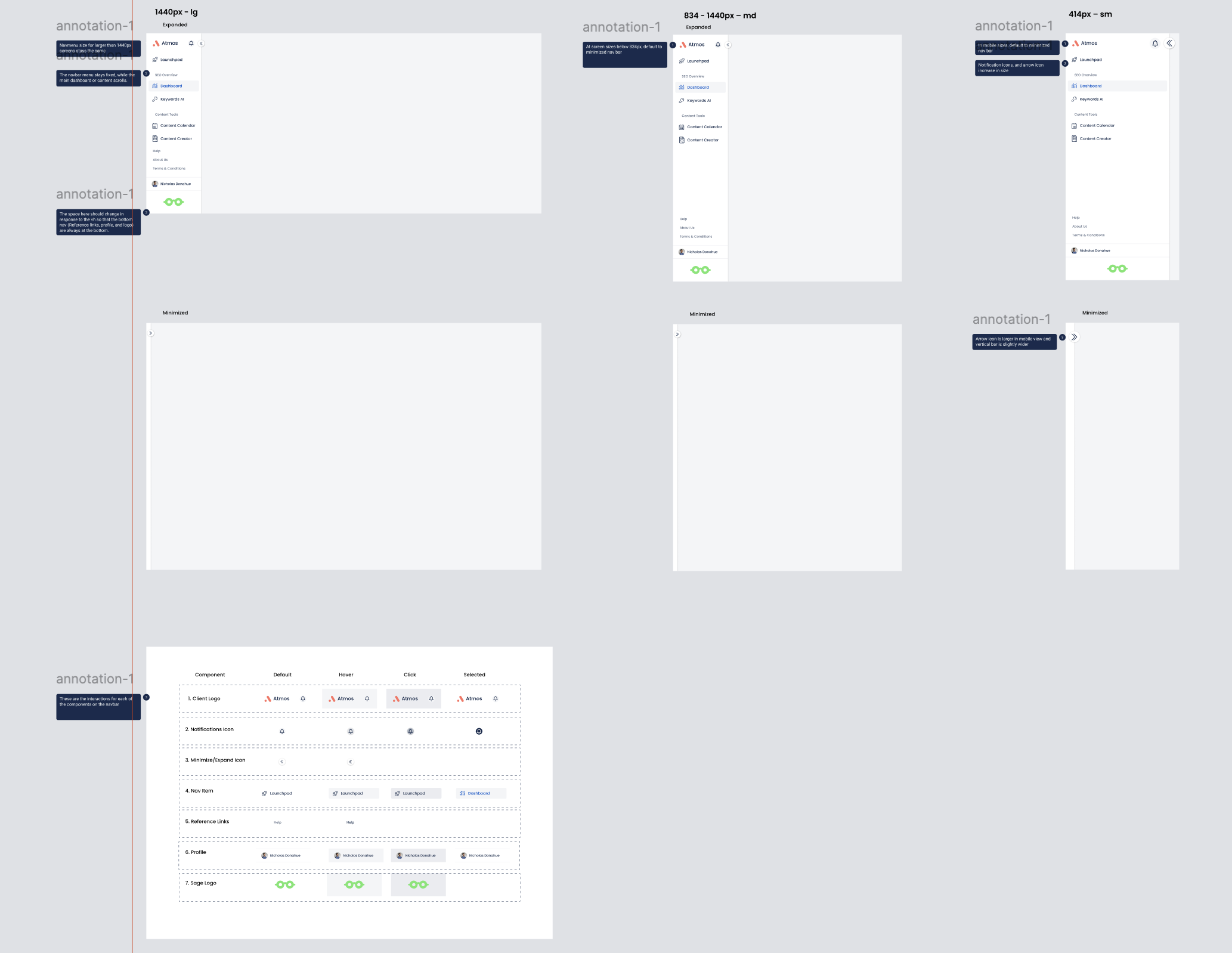
While we had a clear vision for the product, defining the right MVP required continuous prioritization as requirements evolved. After mapping the information architecture, we aligned on three core experiences that would deliver the most value: authentication, platform navigation, and an end-to-end workflow for writing and publishing SEO articles to WordPress.
Other capabilities — payments, account management, and SEO analytics — were still important, but rather than building everything from scratch, we intentionally leveraged existing platforms like Stripe and Google Search Console. This allowed our small team to focus engineering effort on the product's unique value proposition while accelerating our path to launch.
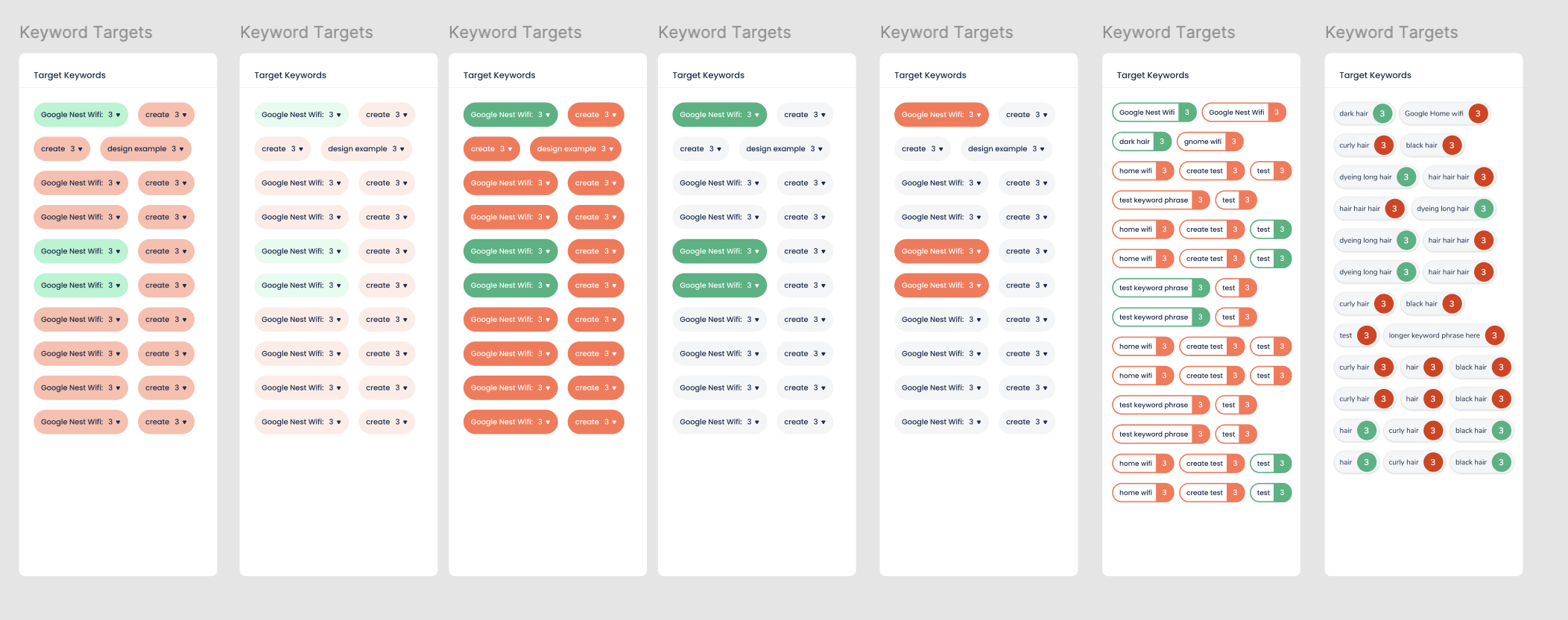
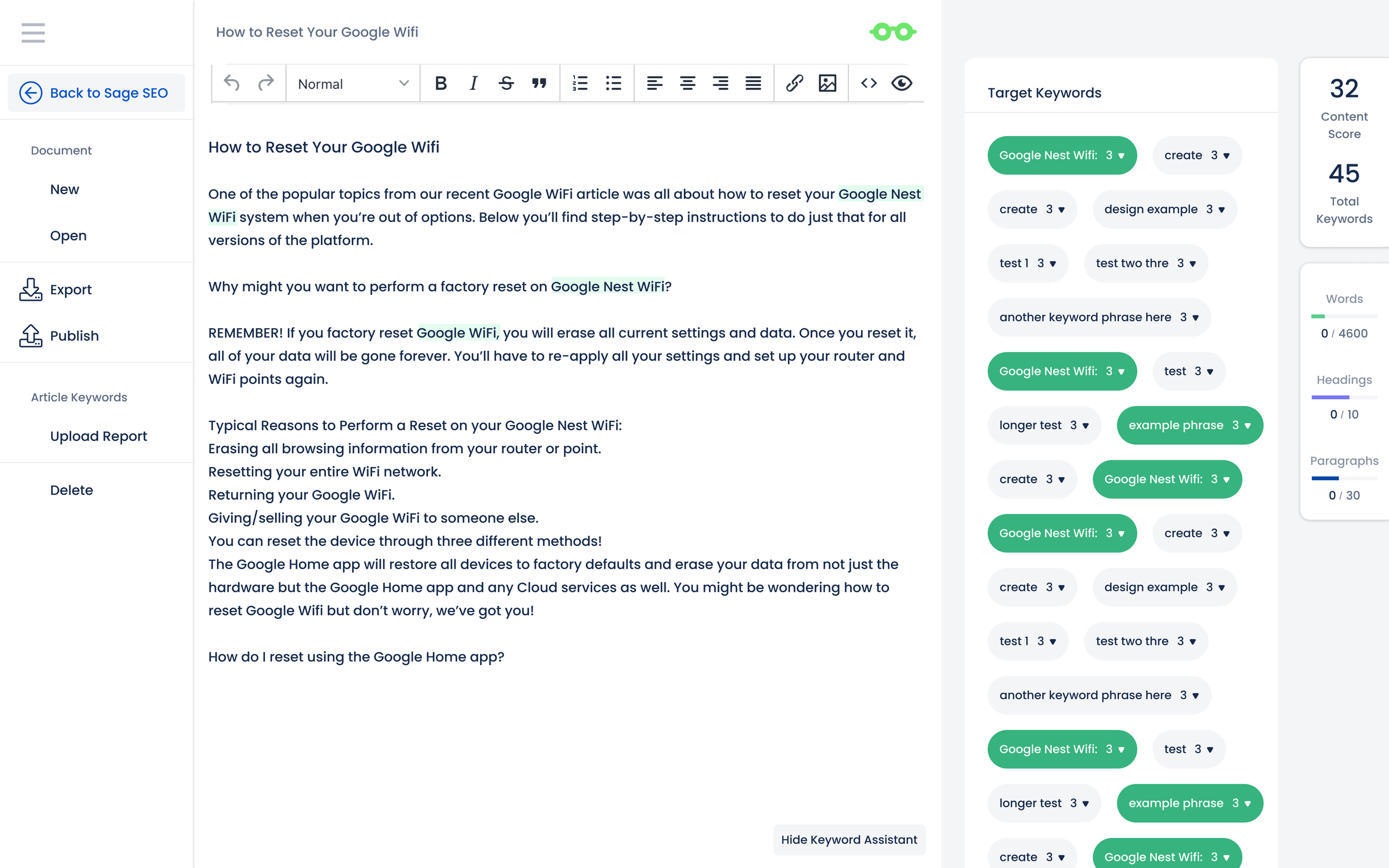
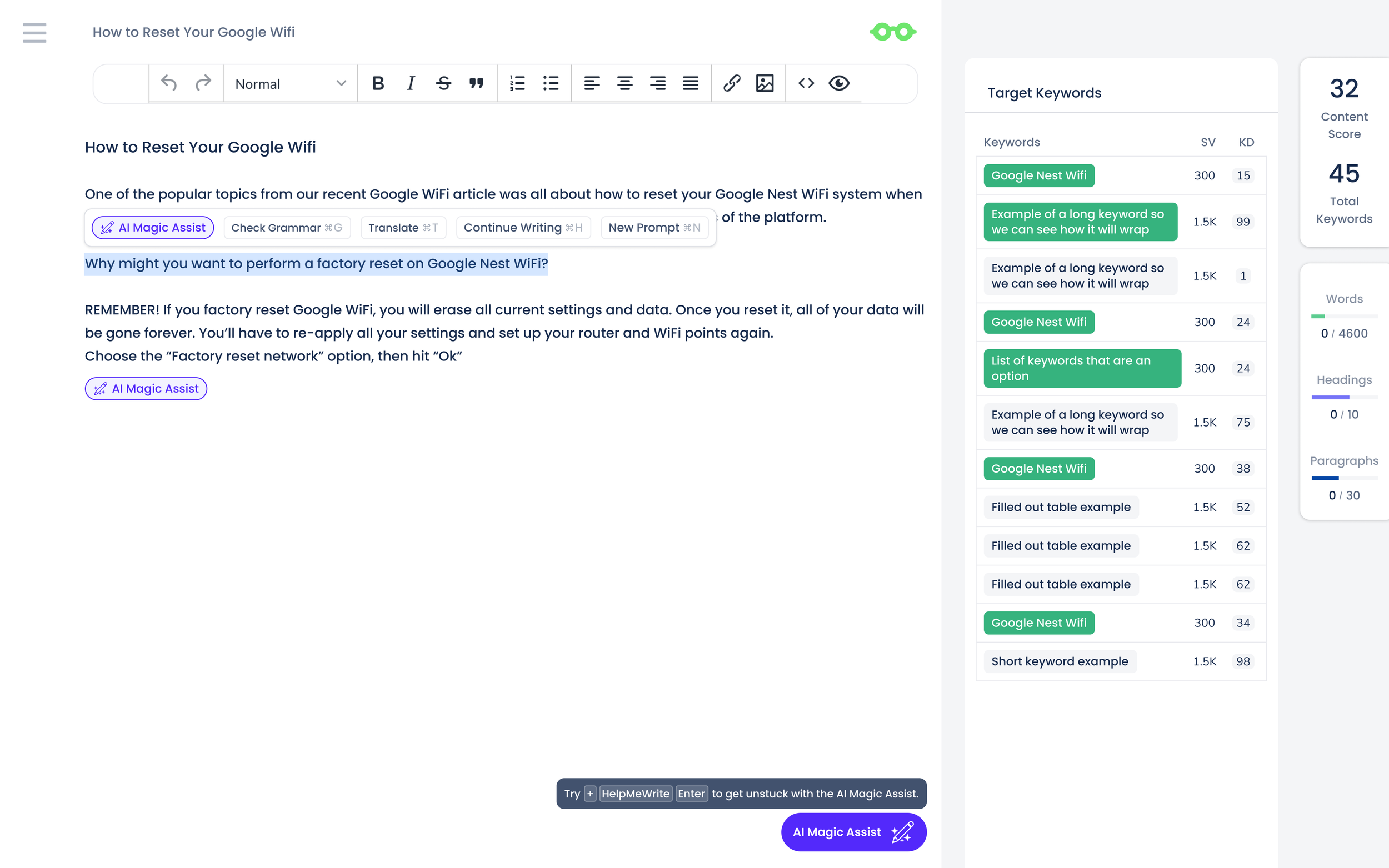
In the early stages, I observed Sage customers toggling between a list of keywords and the articles they were working on, so I designed the writing experience to minimize context switching and keep writers focused. By hiding the navigation and introducing a two-column layout that paired keywords with the editor, I reduced distractions and gamified keyword usage to encourage optimization as users wrote.
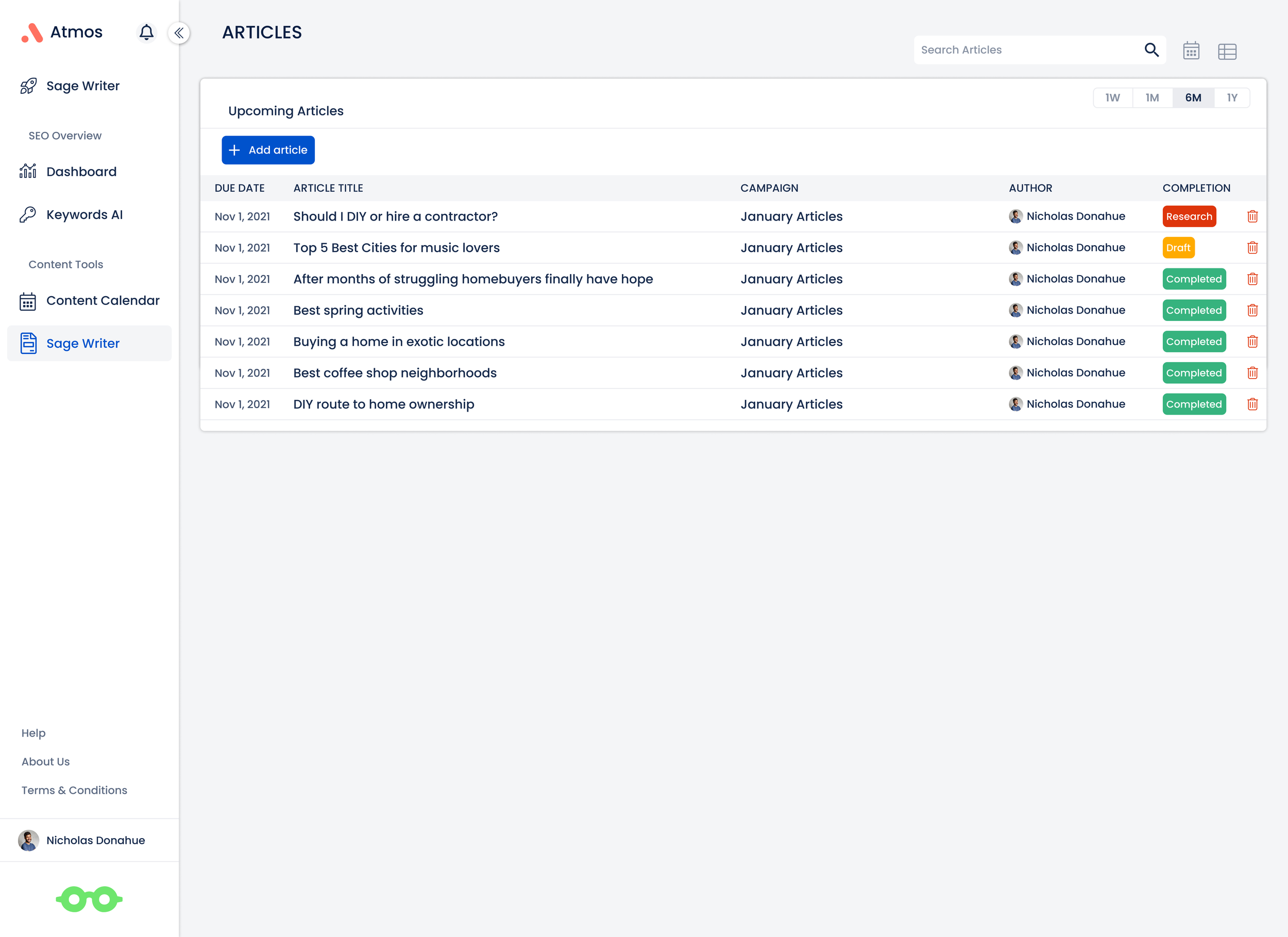
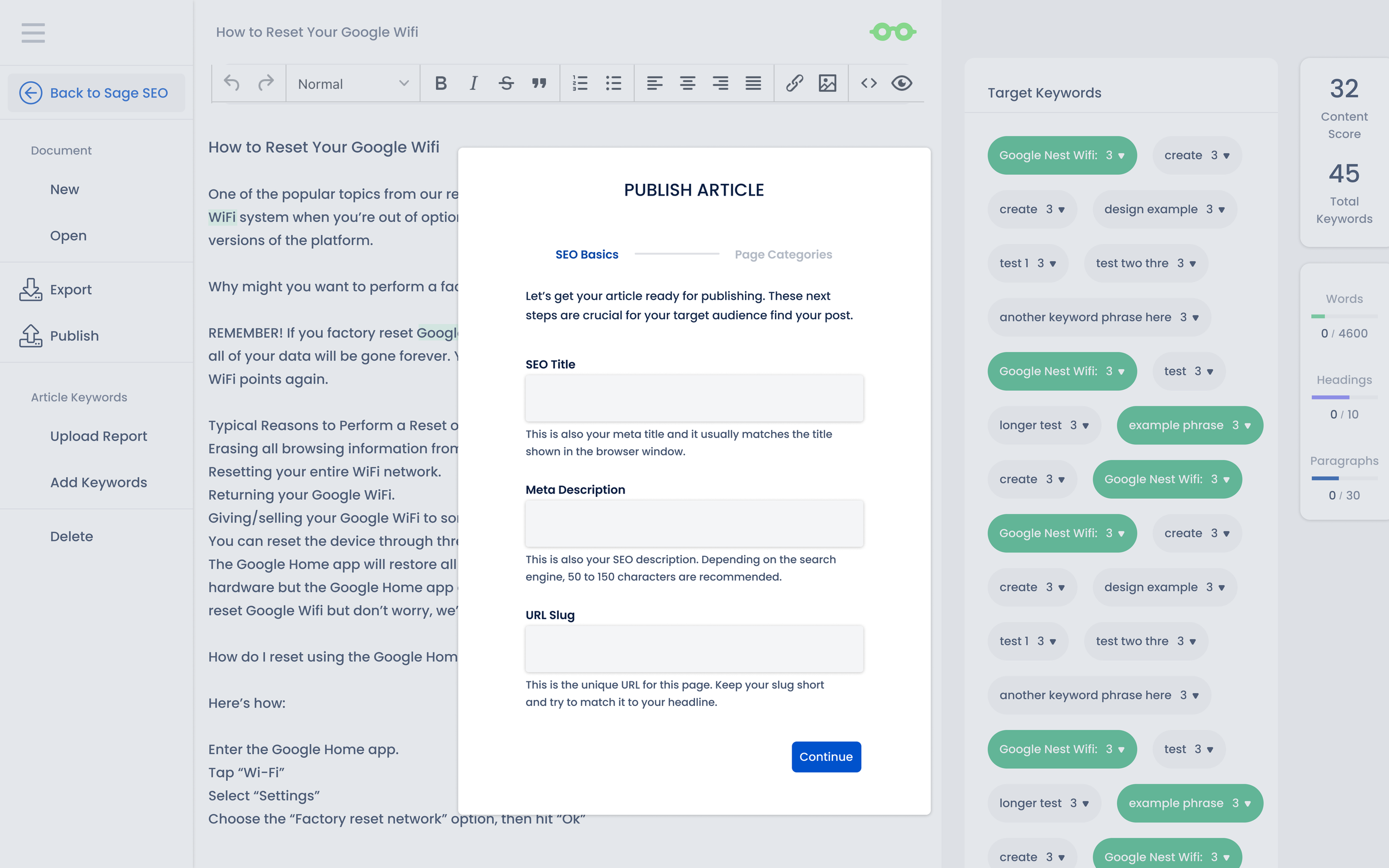
Given that the majority of our target audience managed their blogs on WordPress, I designed a direct API integration enabling users to move seamlessly from content creation to publication.
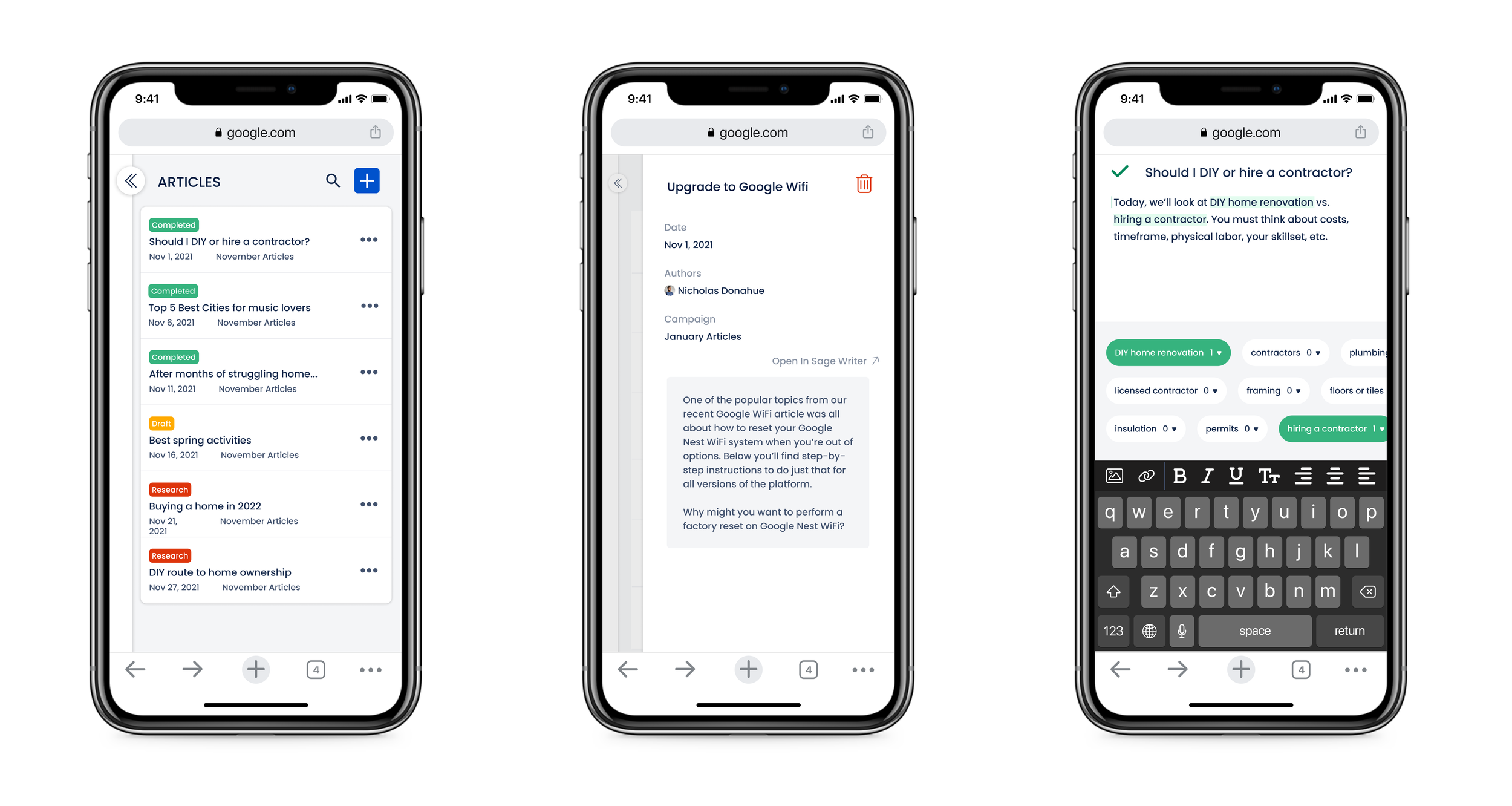
Adapting a data-heavy workspace to mobile required strict prioritization. We considered removing keyword tracking on mobile entirely to maximize screen real estate, but doing so would strip away SageSEO's core value proposition, so I opted for selective feature retention over full feature parity. We condensed keyword tracking into an expandable drawer/header overlay on mobile, allowing users to review drafts and verify keyword coverage on the go without sacrificing editor usability.
Building an AI SEO Platform from the Ground Up
Market Opportunity
$80B+
Personalized Websites within 1-Mo Post-Launch
Agency Cost
$500+
Monthly Cost for an SEO Marketing Agency
For decades, effective search engine optimization (SEO) was largely inaccessible to small businesses, requiring expensive agencies, specialized expertise, and months of content development. As OpenAI’s GPT-3 models evolved into practical content-generation tools, a new opportunity emerged: helping business owners create strategic SEO content without the traditional barriers of time, cost, and technical expertise.
After working on past projects together, the Sage SEO founder approached me with the challenge of “How might we make SEO content simple for everyday business owners?” I partnered with a small bootstrapped team to define the product vision, design the marketing experience, and shape the earliest iterations of the product, from concept exploration through launch.
Scaling the Product
Within a year of pivoting from a Q&A marketplace to a dedicated SaaS platform, complex agency-dependent SEO strategies were transformed into an impactful workflows. Across initial customer cohorts, users achieved a 76% increase in organic traffic, a 92% surge in Top-10 Google keywords, and direct business wins, including a tour operator landing a $10K corporate booking from organic search. These outcomes propelled SageSEO past $100K in ARR and established a proven foundation for product-led growth.