

Role
Lead Designer – Learning Curriculum & Design Transformation, Educator & Mentor
Team
Curriculum Founder
Timeline
Desktop Platform (React), Website (Elementor)
Timeline
2025
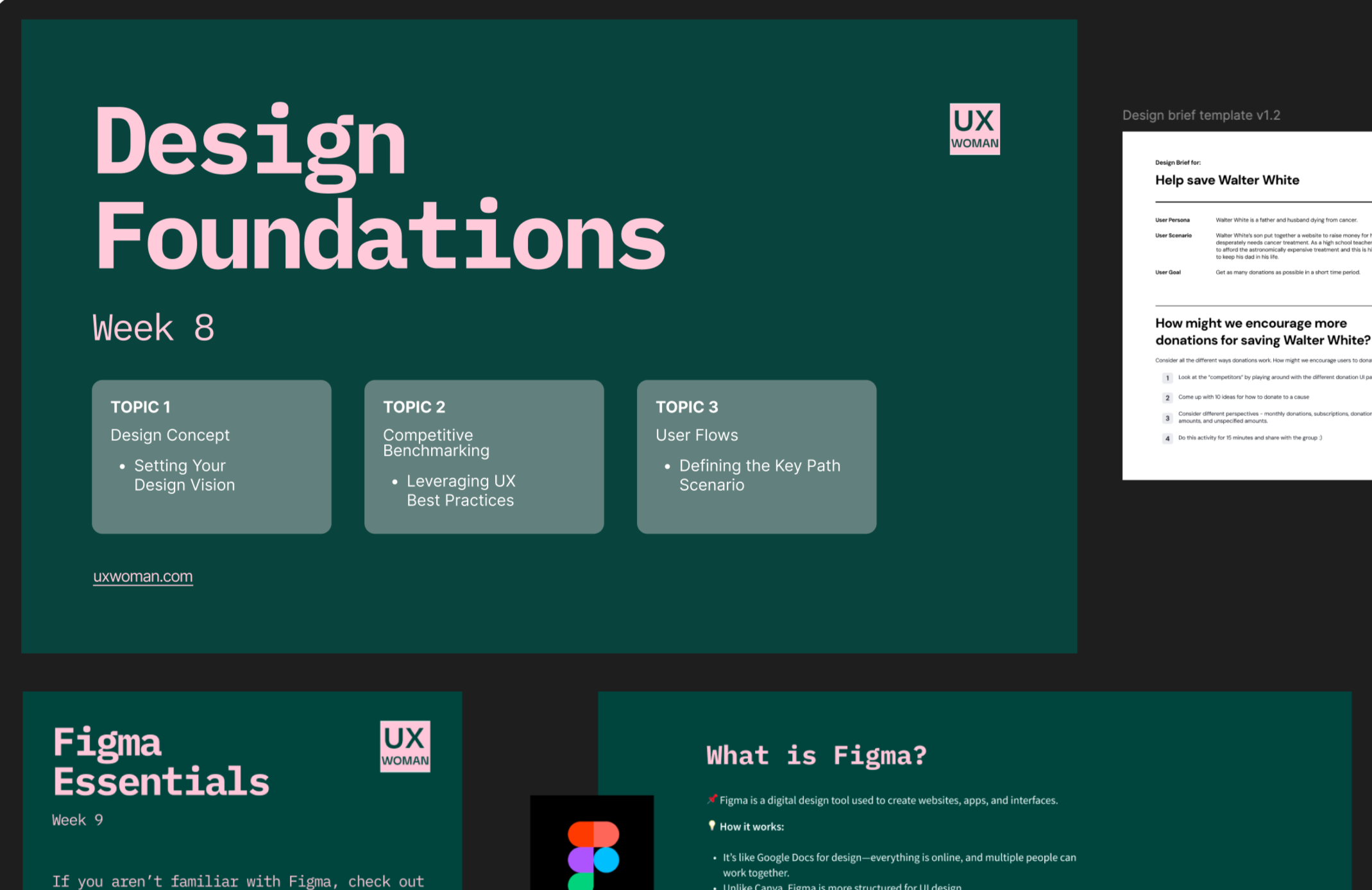
Experience Design
Rather than teaching concepts in isolation, I introduced stories and real-world examples to make abstract ideas easier to understand. Shifting emphasis toward visual judgment through mood boards, critiques, and structured design breakdowns also helped students recognize strong design before producing it.
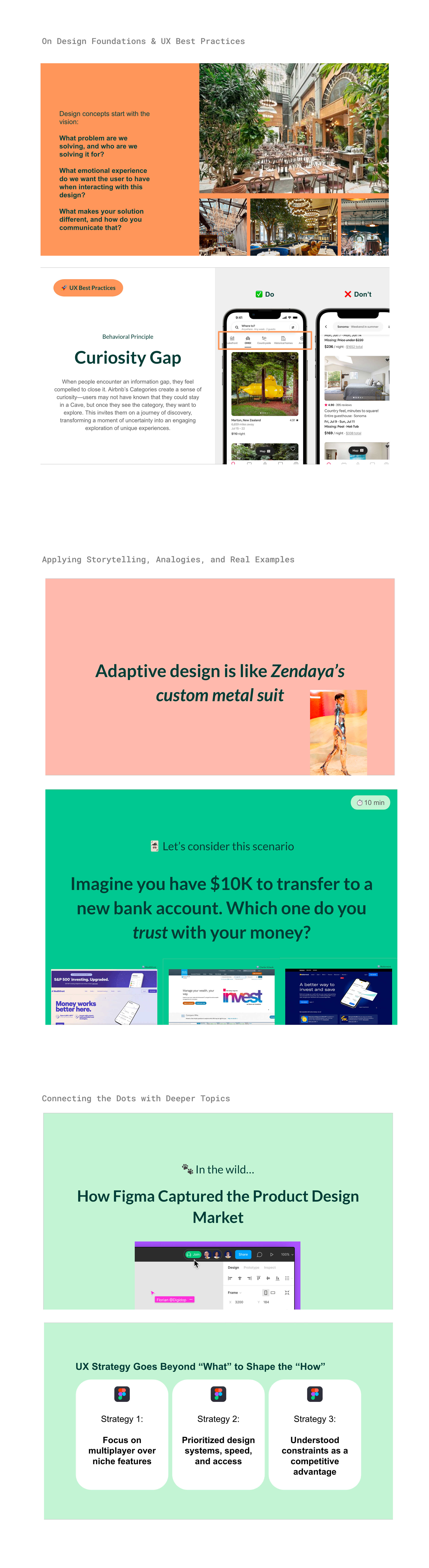
Curriculum Strategy
Heuristics and usability were woven throughout the curriculum instead of isolated into a single session, allowing students to apply them repeatedly in context. Workshop time shifted toward design thinking, giving students more space to explore tools independently. By the final session, students were connecting concepts and came to the open-ended session with deeper questions.
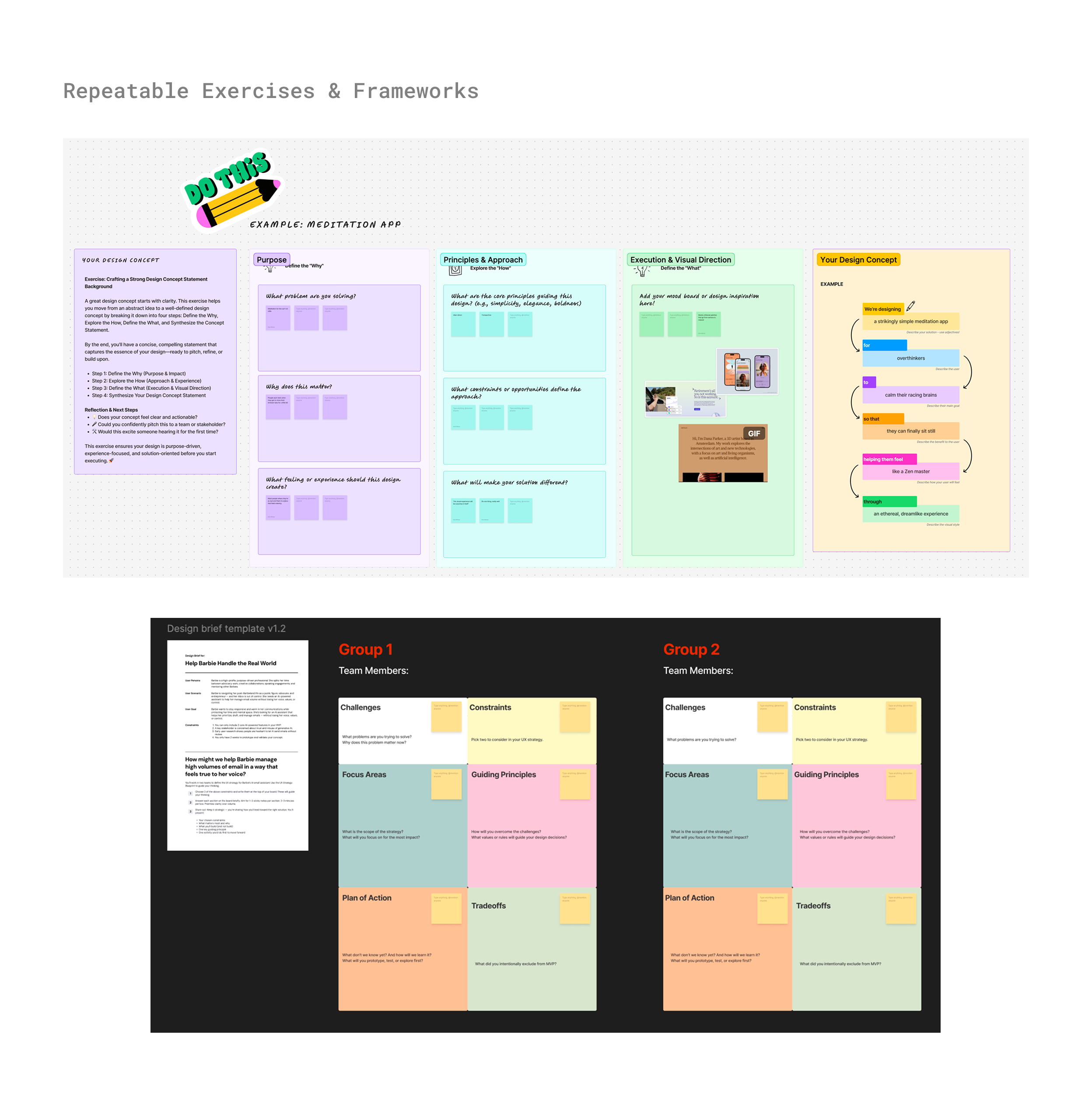
Scaling the System
The curriculum was packaged into a repeatable instructor toolkit with lesson plans, exercises, facilitation guidance. This ensured consistency across instructors while preserving flexibility in delivery.
This revamped curriculum had an immediate impact. Student’s final projects showed a new standard of craft, not only from individual designers but at scale across the entire cohort, with alumni landing roles earning $100K+ across various tech orgs and industries.
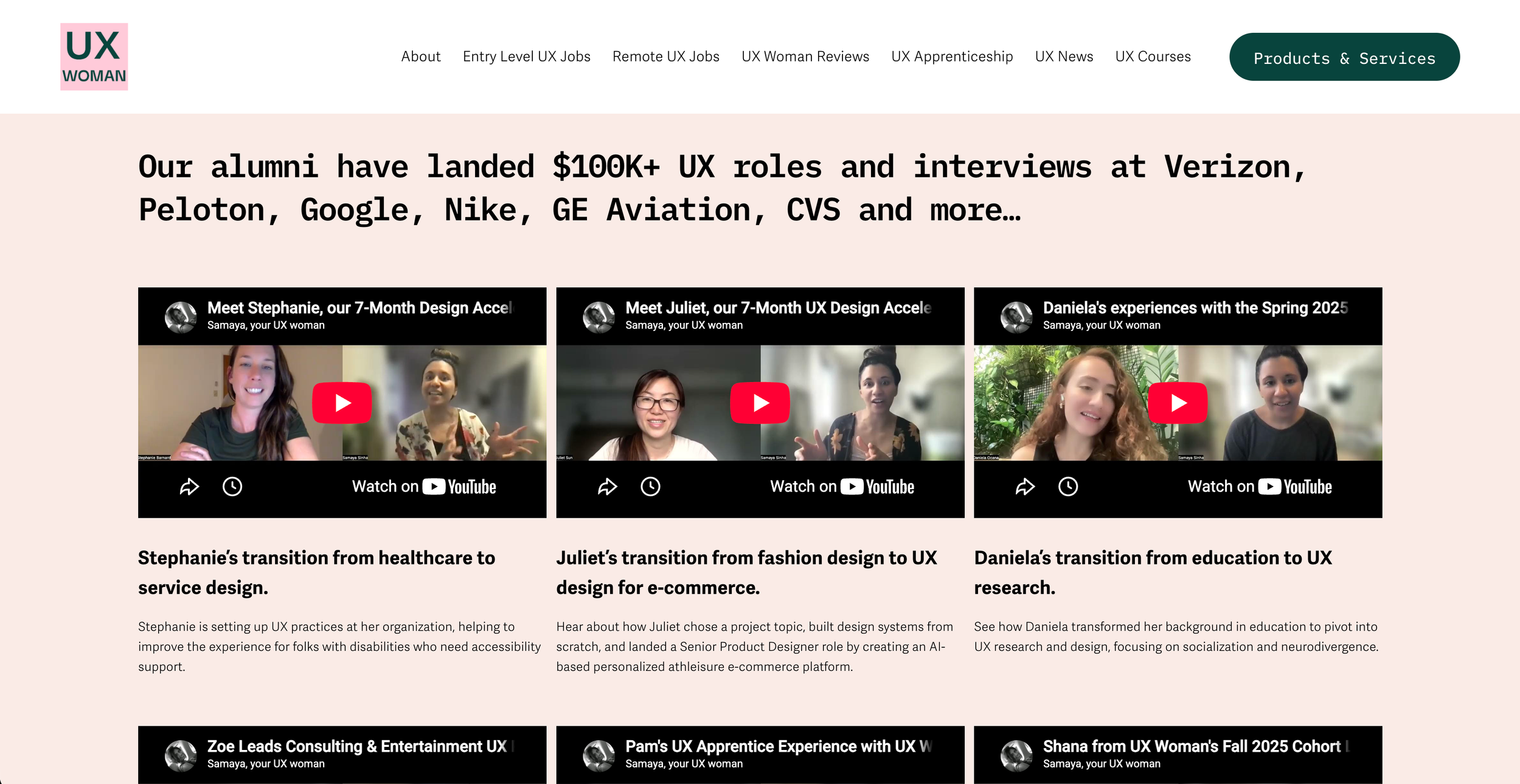
Enabling 90+ UX Designers to Create Better Work
Though UX Woman’s design curriculum was very thorough, the quality of visual outcomes wasn't consistently meeting modern industry expectations. At the same time, the program needed enough structure that any instructor could confidently step in and teach it. My role was to revamp the UX design curriculum to improve project outcomes at scale.